



Introduction
There was a time when social media promised something simple: staying connected with friends and family, regardless of distance. Fast forward to today, and those same platforms have evolved into powerful ecosystems competing for one thing above all else—our attention.
Whether we realize it or not, millions of people begin and end their day with a screen in hand. A quick check of notifications turns into twenty minutes of scrolling. One video becomes ten. A short break becomes an hour lost in an endless stream of content.
The question is no longer whether social media influences our lives. The real question is how much control we still have over it.
The Attention Economy at Work
Modern social platforms are not designed merely to entertain. They are engineered to maximize engagement.
Every like, comment, share, and notification acts as a small reward. These rewards may seem insignificant on their own, but over time they create powerful behavioral patterns. The brain begins to anticipate the next update, the next reaction, the next piece of content.
As a result, checking social media often becomes less of a conscious decision and more of an automatic reflex.

Why We Keep Coming Back
Human beings are naturally social creatures. We seek connection, recognition, and belonging. Social media offers all three—instantly.
A photo receives approval in the form of likes. A post generates comments. A message arrives within seconds. This constant feedback loop can create a sense of validation that is difficult to resist.
At the same time, many users experience a growing fear of missing out. News breaks online. Trends emerge online. Conversations happen online. Staying disconnected, even briefly, can create the impression that something important is happening elsewhere.
When Connection Turns Into Dependence
Not every heavy social media user is addicted. However, certain warning signs deserve attention.
You may be developing an unhealthy relationship with social media if:
- You reach for your phone without thinking.
- You feel anxious when unable to check your accounts.
- Your productivity regularly suffers because of scrolling.
- Sleep is interrupted by late-night browsing.
- Real-world interactions feel less engaging than online ones.
These behaviors often develop gradually, making them easy to overlook until they begin affecting daily life.
The Hidden Cost of Constant Comparison
One of the most overlooked consequences of social media overload is comparison.
Most people share highlights rather than reality. Vacations, achievements, celebrations, and carefully selected moments dominate online feeds. Rarely do users post their failures, doubts, or ordinary days.
The result is a distorted perception of reality.
Constant exposure to idealized lifestyles can leave users feeling inadequate, even when their own lives are perfectly normal. Over time, this can contribute to stress, dissatisfaction, and lower self-esteem.
Reclaiming Your Digital Balance
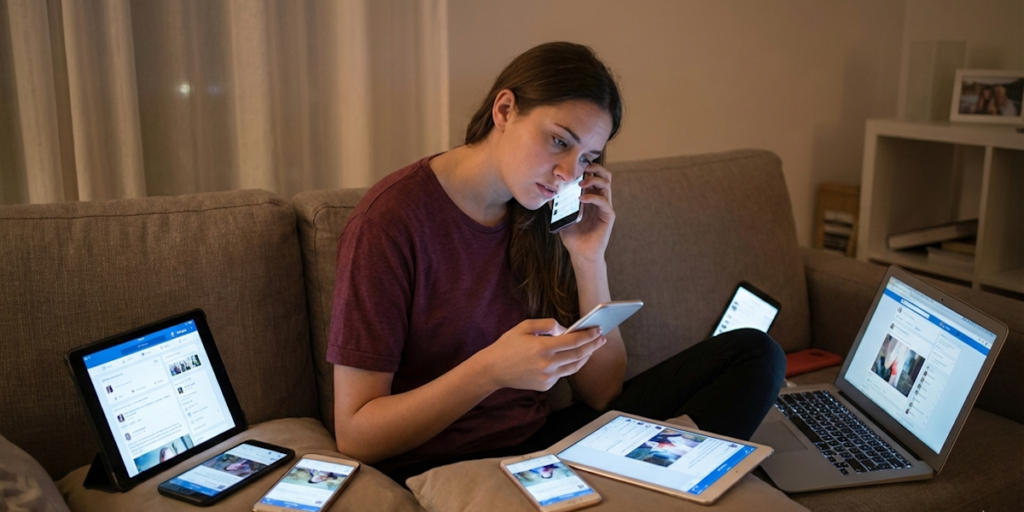
The solution is not necessarily abandoning social media altogether. These platforms offer genuine benefits, from professional networking to learning opportunities and community building.
The goal is balance.
Simple changes can make a meaningful difference:
- Turn off non-essential notifications.
- Schedule specific times for checking social media.
- Avoid screens during meals and before bedtime.
- Follow accounts that educate, inspire, or provide value.
- Spend more time engaging in offline activities and face-to-face conversations.
Small adjustments often produce surprisingly significant results.
Technology Should Serve You—Not the Other Way Around
Social media is one of the defining innovations of the digital age. It has transformed communication, entertainment, business, and culture on a global scale.
Yet the most valuable resource in the digital economy is not data, content, or technology.
It is human attention.
Understanding how social platforms influence our behavior is the first step toward using them more intentionally. The objective is not to disconnect from the world but to reconnect with what truly deserves our time, focus, and energy.
In an age of constant connectivity, the ability to step away from the scroll may be one of the most important digital skills we can develop.