


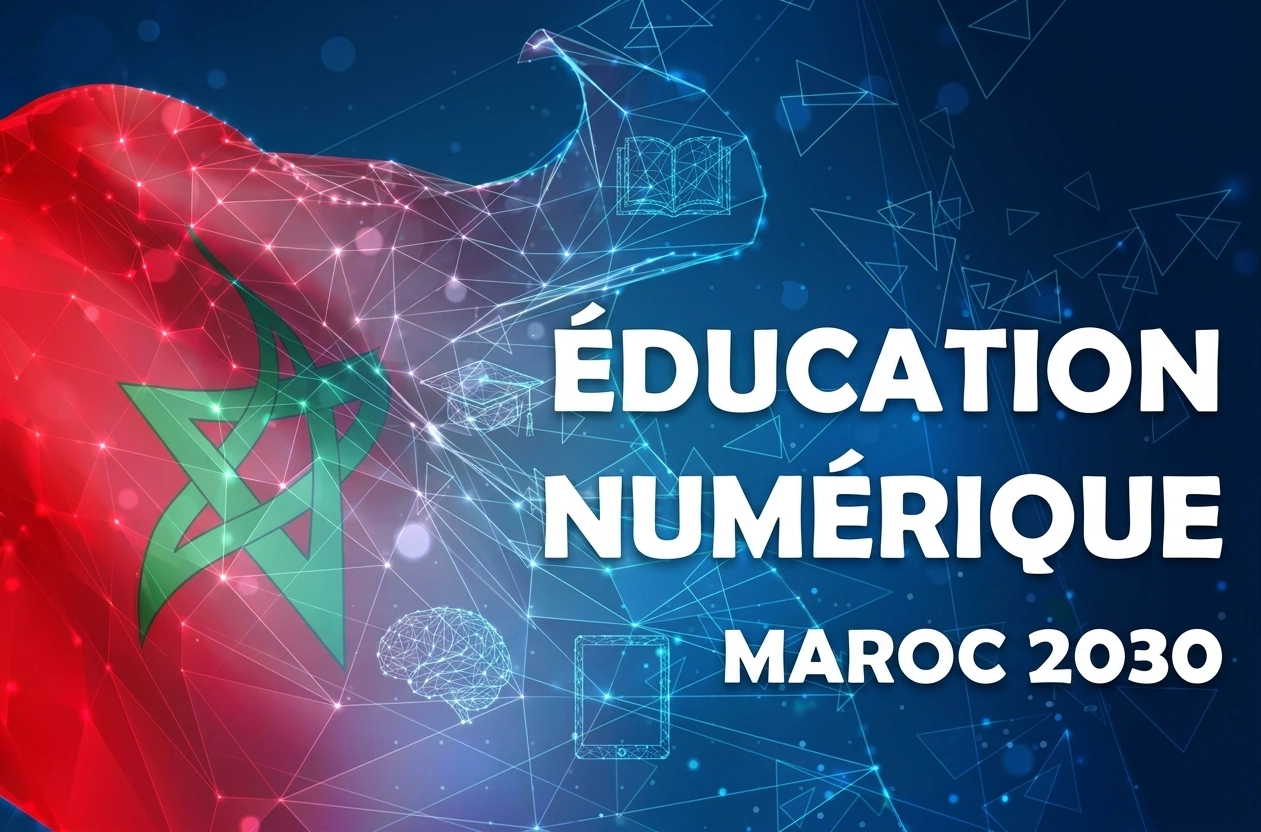

Digital Education in Morocco: Building the School System of 2030
How the Kingdom is engineering a more connected, equitable classroom—one region at a time
Morocco is in the midst of one of the most significant transformations in its educational history. Between institutional reform, large-scale technology pilots, and international partnerships, the country is committing decisively to building a school system that is more connected, more equitable, and better equipped for the demands of the 21st century. This article offers a structured overview of that transformation—from its legal foundations to its most forward-looking ambitions.
Part 1 — Context and Strategic Drivers for Digitalization
A Long-Term Vision: The 2015-2030 Strategic Roadmap
The starting point is a clear diagnosis: Morocco’s education system needed to reinvent itself to meet rising demands for quality, equity, and employability. Developed by the Higher Council for Education, Training and Scientific Research (CSEFRS), the 2015-2030 Strategic Vision for Education Reform lays the foundation for what it calls « a school of equity, quality, and advancement. » Its stated ambition is to guarantee the right to quality education for all and to prepare citizens capable of actively contributing to the country’s development.
This vision was never intended as a purely aspirational document—it was translated into binding legislation that engages every stakeholder in the system.
Framework Law 51.17: The Legal Backbone of Reform
Adopted in 2019, Framework Law No. 51.17 on the education, training, and scientific research system serves as the legal instrument that operationalizes the 2015-2030 Vision. It commits the state, local authorities, schools, and private partners to a shared set of objectives: territorial equity, improved pedagogical quality, and renewed governance.
In practice, its implementation rests on three strategic pillars:
- Equal opportunity, with projects targeting rural areas and vulnerable populations;
- Improved quality of education and training, including a comprehensive curriculum overhaul;
- Governance and mobilization, strengthening cooperation between central administration and regional actors.
This framework, reinforced by the 2022-2026 Roadmap « For a Quality Public School for All, » explicitly positions digital technology as a cross-cutting lever for modernization—no longer a peripheral technical add-on, but a strategic priority.
Why Digital Technology Has Become a Matter of Educational Sovereignty
Three factors explain the recent acceleration of school digitalization in Morocco:
- Demographics and territory: a vast country marked by pronounced disparities between urban and rural areas, where digital technology can either narrow—or dangerously widen—gaps in access to knowledge.
- Economic competitiveness: digital skills are now regarded as a cornerstone of youth employability in a rapidly changing labor market.
- International momentum and partnerships: multilateral organizations and private technology players increasingly view North Africa, and Morocco in particular, as a strategic testing ground for digital education initiatives.
Part 2 — Pilot Projects and Infrastructure Deployment
DigiSchool 2025: A Flagship Public-Private Partnership
The DigiSchool 2025 program, launched on March 25, 2025 in Rabat by Morocco’s Ministry of National Education, Preschool, and Sports in partnership with Huawei Morocco, is a concrete illustration of this momentum. Building on the success of its first phase in 2024—which had already trained several hundred teachers and students—the program is scaling up significantly in 2025, with ambitious quantified targets:
📊 DigiSchool 2025 by the Numbers
- 1,800 teachers trained in emerging technologies
- 36,000 students introduced to digital tools
- 248 schools participating nationwide
- Rollout across all 12 regions of the Kingdom
The program unfolds in several phases: an initial training workshop for teachers and students, followed by remote support for « DigiSchool clubs » established in participating schools. Students are introduced to coding, robotics, and augmented reality, while teachers receive training on integrating these tools into their pedagogical practice. Hackathons and technology fairs are also organized to spark friendly competition and collaboration between schools. Huawei Morocco’s General Manager has emphasized the structuring role of this public-private partnership, presenting it as a replicable model for building a sustainable digital education ecosystem.
Building on the Legacy of the GENIE Program
DigiSchool did not emerge in a vacuum. It builds on earlier initiatives such as the GENIE program, a pioneering effort to equip Moroccan schools with IT infrastructure, as well as on international agreements like the partnership with the Millennium Challenge Corporation focused on education for employability. This accumulation of initiatives—historically criticized for insufficient coordination—is increasingly being structured and streamlined under the umbrella of Framework Law 51.17.
Public-Private Partnerships as an Acceleration Engine
Beyond Huawei, the public-private partnership (PPP) model has become the ministry’s preferred method for multiplying its reach and impact. These collaborations mobilize:
- Complementary funding beyond public budgets;
- Cutting-edge technological expertise, particularly in artificial intelligence, connectivity, and cybersecurity;
- Proven training methodologies drawn from international experience.
This approach reflects a simple reality: the Moroccan state cannot single-handedly carry the full weight of equipping and training efforts across 12 regions and thousands of schools. The private sector has become a structural partner in public education policy—not merely a sponsor, but a co-architect of implementation.
Part 3 — Persistent Challenges and Future Outlook
The 2024 UNESCO Report: A Candid Regional Diagnosis
In November 2024, UNESCO launched in Rabat the first edition of its annual regional publication « A Look at Education in the Maghreb, » devoted in 2024 to the digital transformation of education systems, under the evocative title « From Caterpillar to Butterfly. » Developed in collaboration with the education ministries of Morocco, Algeria, Libya, Mauritania, and Tunisia, the report offers a candid assessment: digital transformation is a long and demanding journey, but one whose intended outcome—a reasoned, accessible, inclusive, and sustainable use of technology for quality education—is well worth pursuing.
The report puts forward several structural recommendations directly relevant to Morocco:
- A clear digital skills framework, harmonizing training standards for both students and teachers.
- Strengthened teacher training, paired with systematic evaluation of its actual impact on classroom practice.
- Improved interoperability of data across the various educational information systems.
- Clear regulatory frameworks for artificial intelligence, ensuring ethical use of AI in school settings, alongside dedicated teacher training on these tools.
Territorial Equity: A Persistent Challenge
The report also highlights, in its regional analysis, that territorial inequality remains one of the main factors limiting educational progress across Maghreb countries. The gap between urban and rural areas in terms of infrastructure access, connectivity, and digital skills remains significant. For Morocco, this means that the success of programs like DigiSchool 2025 cannot be measured solely by the number of equipped schools—it must be measured by the actual narrowing of gaps between the best-served regions and the most isolated areas.
Cybersecurity and Artificial Intelligence: Recommendations to Anticipate
As digital tools become more widespread in schools, two priorities are emerging for the years ahead:
- School cybersecurity: protecting student and teacher data, securing educational platforms, and raising staff awareness of digital risks (phishing, identity theft, cyberbullying).
- Thoughtful integration of artificial intelligence: establishing clear ethical guidelines, training teachers in the pedagogical use of generative AI, and remaining vigilant about algorithmic bias that could reinforce—rather than reduce—existing inequalities.
These recommendations, championed by UNESCO, align closely with priorities already embedded in Framework Law 51.17 concerning governance and quality, providing a coherent roadmap for the years ahead.
21st-Century Skills as a Pedagogical Compass
Beyond infrastructure, the central challenge of this transformation remains pedagogical. 21st-century skills—critical thinking, creativity, collaboration, problem-solving, and digital literacy—must be woven throughout curricula, rather than confined to an isolated computer science class. This is precisely the ambition behind the digital skills framework recommended by UNESCO: a shared reference point, graduated from primary through secondary school, that combines technical proficiency with transversal competencies.
Conclusion: Toward an Inclusive, Innovative Moroccan School
The digitalization of Morocco’s education system is no longer a hypothetical future—it is a trajectory already underway, supported by a solid legal architecture (the 2015-2030 Vision and Framework Law 51.17), concrete large-scale projects (DigiSchool 2025), and a demanding international dialogue (the 2024 UNESCO report). The coming years will be decisive in transforming these gains into lasting achievements: closing the territorial divide, ensuring continuous, high-quality teacher training, establishing ethical guardrails for artificial intelligence, and securing digital learning environments.
The Moroccan school of tomorrow is being shaped at the intersection of these choices: a school where technology does not replace the teacher but empowers them; where innovation benefits not only major cities but reaches every region; and where every student—regardless of where they live—finds in digital technology a tool for empowerment rather than a source of exclusion. Only on these terms will UNESCO’s metaphor come fully true: that the caterpillar will indeed become a butterfly.
Sources: Morocco’s Ministry of National Education, Preschool, and Sports; CSEFRS; UNESCO Regional Bureau for the Maghreb; Maroc.ma; Médias24; La Vie Éco; Challenge.ma; Express TV Maroc.